
Selection parameters
- Validation
- compound dependent
01Validation route
Confirm the matrix, target properties and process window, then select surface treatment, run a dosage gradient and retest performance. Published data does not replace customer-specific validation.
APPLICATION EVIDENCE
Application test data
These records relate to this application. Formulations, loadings and conditions differ; review the complete comparisons.
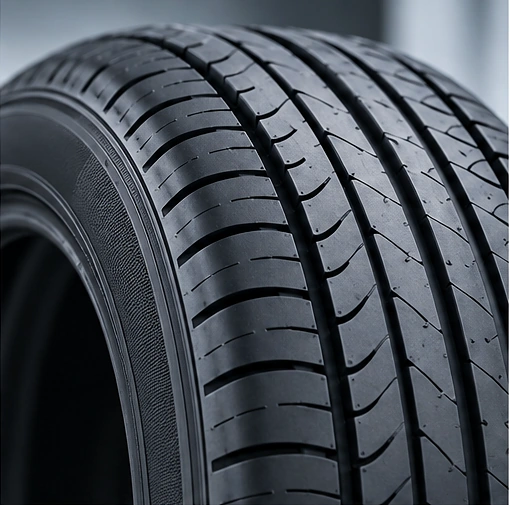
1 data tablesTyre tread rubber: 10% whisker versus blank
The 10% whisker group records 18.6 MPa tensile strength and 521% elongation. Lower hardness and the missing abrasion unit are retained; these are not whole-tyre performance results.
- Filler loading
- 10 %
The table labels its groups “whisker” and “blank”; the prose also mentions silica without a full formulation or replacement ratio. The original two groups are retained without assuming a specific replacement. The 10% basis, such as total mass or rubber parts, is unspecified.
Swipe to compare all columns ↔
| Property | Unit | Blank | 10% whisker group |
|---|---|---|---|
| Shore hardness (scale unspecified) | — | 66 | 65 |
| Stress at 100% elongation | MPa | 1.94 | 1.96 |
| Stress at 300% elongation | MPa | 6.2 | 6.3 |
| Stress at 500% elongation | MPa | — | 16.5 |
| Tensile strength | MPa | 17.2 | 18.6 |
| Elongation at break | % | 499 | 521 |
| Abrasion (unit / method unspecified) | — | 187.3 | 183.6 |
Hardness is 65 versus 66 for the blank. The blank has no 500% stress value and must not be assigned zero. Abrasion readings of 183.6 and 187.3 lack units, methods and uncertainty; they cannot quantify tyre life, wear improvement or safety.
02Source and conditions
Source: 超细纤维添加各个行业的测试数据.pdf, PDF pp. 9. Test date not supplied. No named testing organisation or report number is given.
These records compare the listed formulations and are not guaranteed values for every grade. Full raw-material grades, batches, specimen counts and repeatability are not supplied. Repeat the trials with the intended materials and process.